Enjoy Free Delivery on Orders Over HKD 1,600!
Hungary's Wine Regions
Hungary has 22 officially designated wine regions, each with its own unique terroir, history, and character. Our curated selection spans five of the most prestigious.

Same latitude as Bordeaux — world-class reds at extraordinary value
Villány
Villány is Hungary's southernmost and warmest wine region, sharing the same latitude as Bordeaux. The region's unique combination of Mediterranean climate, limestone-rich soils, and south-facing slopes creates ideal conditions for producing world-class red wines. Villány's Cabernet Franc, Merlot, and Bordeaux-style blends have earned international acclaim, with wines from estates like Gere Attila outperforming Château Pétrus in blind tastings.
Wine has been produced in Villány since Roman times, when the region was known as Sopianae. The modern era of premium winemaking began in the 1990s, when pioneering winemakers like József Bock and Attila Gere began producing wines of international quality. Today, Villány is recognised as Hungary's premier red wine region.
KEY GRAPES
Cabernet Franc, Merlot, Cabernet Sauvignon
Warm continental with Mediterranean influence
Limestone, loess, and clay. South-facing slopes maximise sun exposure.
Climate
Soils
Wines from Villány
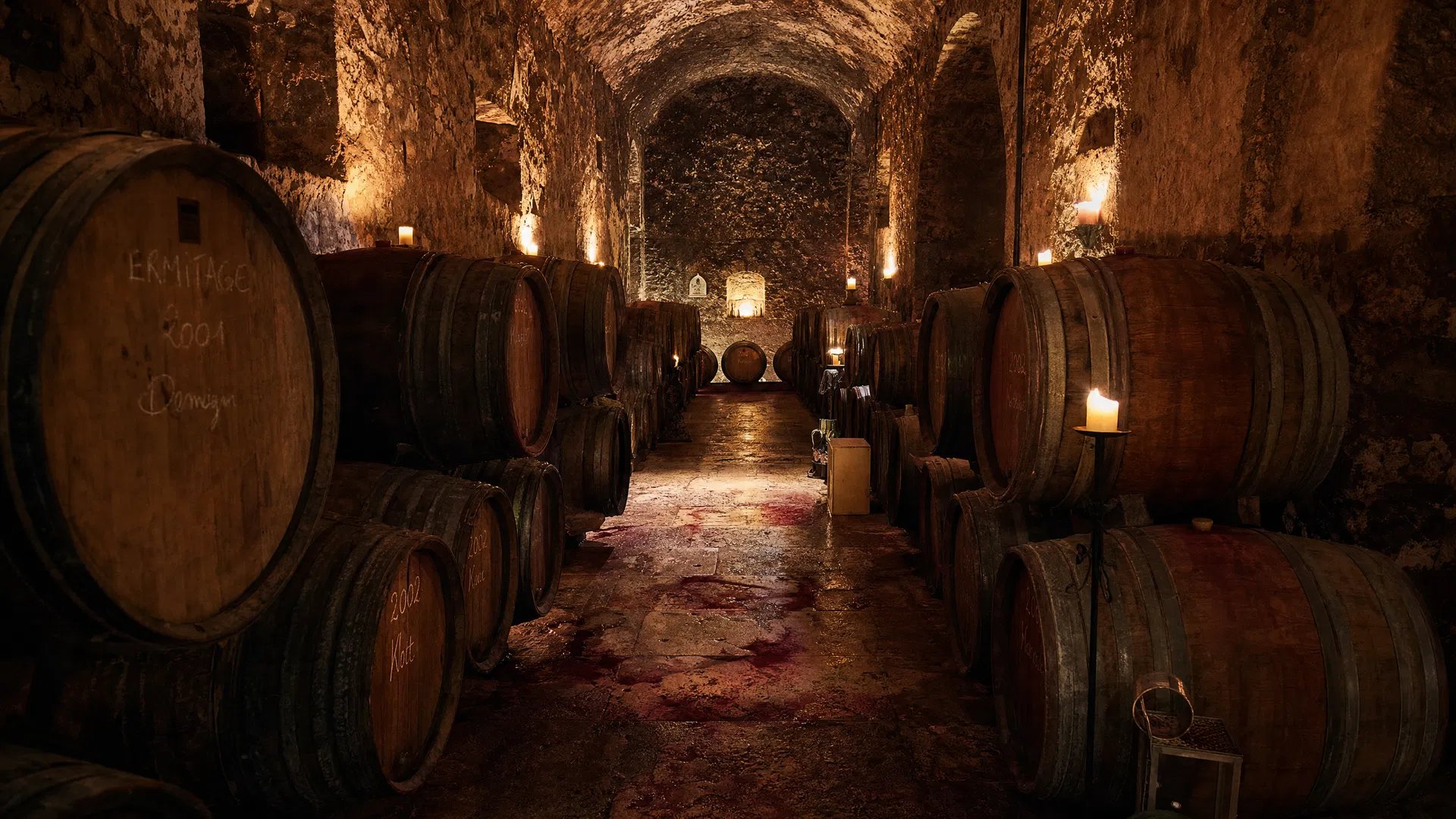
500 years of Bull's Blood tradition — Hungary's most legendary wine style
Szekszárd
Szekszárd is one of Hungary's oldest and most historically significant wine regions, located in southern Transdanubia. The region is famous for Bikavér (Bull's Blood) — Hungary's most legendary wine style — and produces powerful, characterful reds from indigenous varieties including Kékfrankos and Kadarka. The ancient loess soils of Szekszárd give the wines a distinctive earthy, mineral character.
Winemaking in Szekszárd dates back to Roman times. The region became famous in the 16th century for Bikavér, which was said to have given the defenders of Eger Castle the strength to repel the Ottoman army. Today, producers like Péter Vida are bringing international recognition to Szekszárd's single-vineyard wines.
KEY GRAPES
Kékfrankos, Kadarka, Merlot
Warm continental
Ancient loess deposits
Climate
Soils
Wines from Szekszárd

UNESCO World Heritage — Europe's first officially designated wine region
Tokaj
Tokaj is one of the world's most famous wine regions — a UNESCO World Heritage Site and Europe's first officially designated wine appellation. Located in northeastern Hungary where the Bodrog and Tisza rivers meet, the region's unique combination of volcanic soils, autumn mists, and the noble rot fungus (Botrytis cinerea) creates the conditions for producing Aszú wines of extraordinary sweetness and complexity.
Tokaj's winemaking history spans over 1,000 years. The Aszú method — selecting individual botrytised berries — was first documented in 1630, making Tokaj the world's first wine region to officially classify its vineyards. The wine became the drink of European royalty, earning the title 'Wine of Kings, King of Wines' from Louis XIV of France.
KEY GRAPES
Furmint, Hárslevelű, Muscat Blanc à Petits Grains
Continental with unique autumn mist conditions promoting noble rot
Volcanic rhyolite tuff
Climate
Soils
Wines from Tokaj
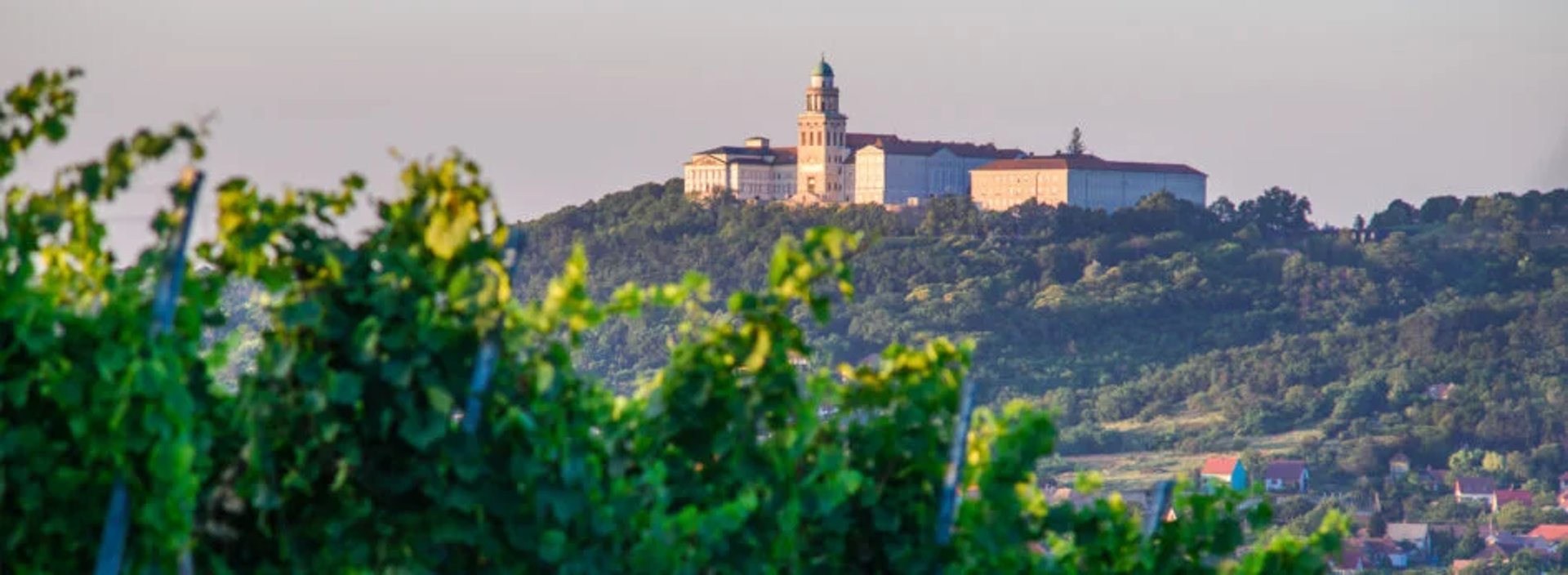
1,000 years of monastic winemaking — UNESCO World Heritage Abbey
Pannonhalma
Pannonhalma is Hungary's smallest wine region, centred on the UNESCO World Heritage Benedictine Archabbey founded in 996 AD. The monastic winery produces elegant whites and reds from hillside vineyards with over 1,000 years of viticultural history. The region's unique microclimate — influenced by the Danube and the Abbey's elevated position — creates wines of remarkable freshness and elegance.
The Benedictine monks of Pannonhalma have been cultivating vines since the Abbey's founding in 996 AD. After the Communist era confiscated the vineyards, the Abbey revived its winemaking tradition in the 1990s, opening its modern winery to visitors in 2004. Today, the Abbey's wines are among Hungary's most sought-after.
KEY GRAPES
Pinot Gris, Chardonnay, Riesling
Temperate continental
White and red clay on hillside slopes.
Climate
Soils
Wines from Pannonhalma
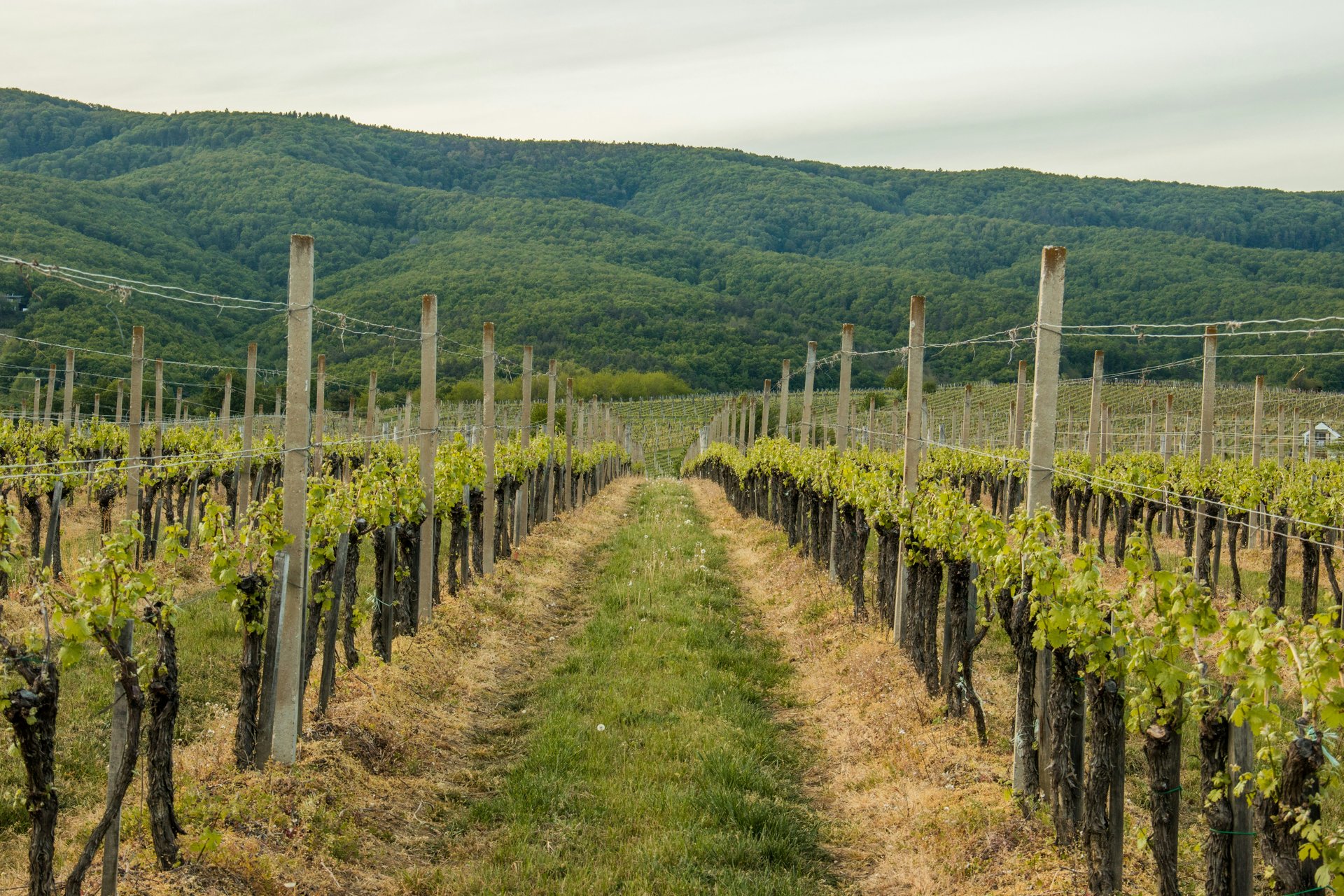
Volcanic soils meet lake breezes — unique mineral wines
Balatonboglár
Balatonboglár is located on the southern shores of Lake Balaton — Central Europe's largest lake. The region's unique combination of volcanic basalt soils, the lake's moderating influence, and abundant sunshine creates wines of remarkable freshness, mineral character, and concentration. Both bold reds and elegant whites thrive here.
Winemaking around Lake Balaton dates back to Roman times. The region's modern era began in the 1990s, when producers began recognising the unique potential of the volcanic soils and lake microclimate. Today, Balatonboglár is known for producing some of Hungary's most distinctive wines.
KEY GRAPES
Cabernet Franc, Merlot, Chardonnay
Temperate continental, moderated by Lake Balatoton's thermal mass
Volcanic basalt
Climate
Soils
Wines from Blatonboglár

The Vineyard of Budapest, produces crisp whites and sparkling wines from limestone soils
Etyek-Buda
Törley Hungaria Grand Cuvée Brut is crafted primarily from grapes sourced and processed in the "Etyek-Buda" wine district, located in the Upper Pannon region of Hungary. The base wines are blended and aged in the cellars of Budafok, on the outskirts of Budapest.
Terroir & Climate: The region is highly influenced by a cool climate and rolling hills with high limestone and loess soils. This specific soil and temperature profile closely mirrors that of the famous Champagne region in France, allowing grapes to retain the crisp acidity required for brut sparkling wines.
KEY GRAPES
Champagne grapes, Chardonnay and Pinot Noir
Cool, constant-temperature limestone cellars
limestone-rich brown forest soil (barna erdőtalaj)
Climate
Soils
Wines from Etyek-Buda
Address
+852 9547 9087
sales@wineville.com.hk
Wineville
Rm F, 18/F, World Tech Centre,
95 How Ming Street, Kwun Tong,
Hong Kong
Contacts
2026 Wineville Hong Kong
根據香港法律,不得在業務過程中,向未成年人售賣或供應令人醺醉的酒類。
Under the law of Hong Kong, intoxicating liquor must not be sold or supplied to a minor in the course of business.
By using this site you represent that you are over the age of 18.